The remarkable growth in recent years has demonstrated the strong appeal of Vietnam’s durian export market on the global agricultural map. To help businesses capture new trade opportunities and stay updated on the latest consumer trends, this article provides an in-depth analysis of the market landscape and promising B2B opportunities. Let’s explore the latest insights with Mita Food!
Growth trends and market structure of Vietnam’s durian export market
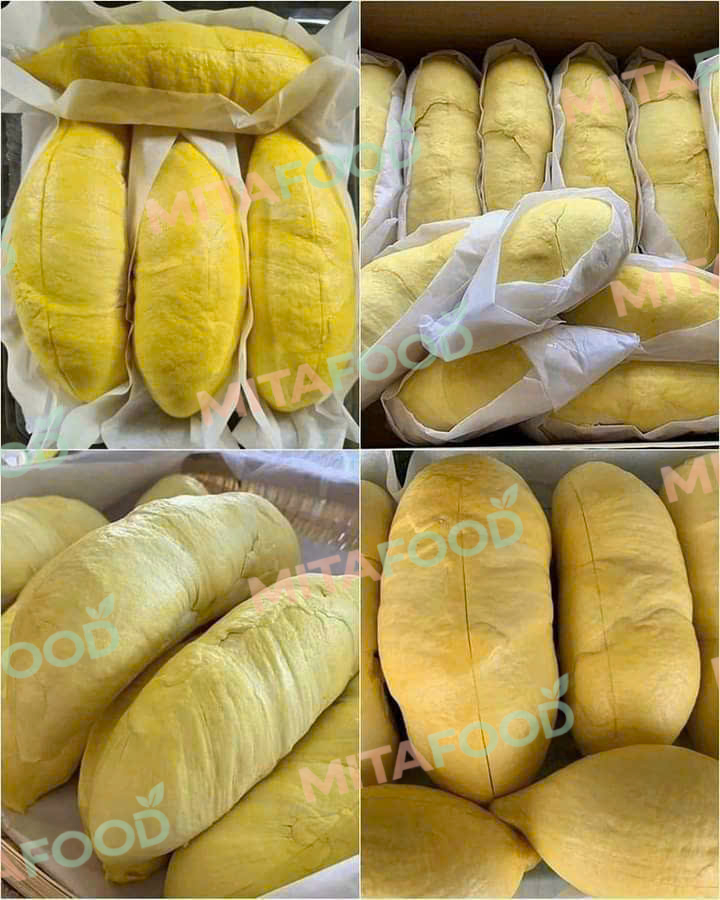
During the first seven months of 2026, Vietnam’s durian export turnover recorded impressive results, reaching approximately USD 1.77–1.8 billion. This figure represents a remarkable year-on-year increase of 42%–47% compared with the same period in 2025, providing important momentum for the industry to pursue its target of reaching USD 4 billion in full-year export value.
In terms of market structure, China continues to hold a dominant position, accounting for approximately 90%–91% of Vietnam’s total durian export value. Meanwhile, frozen durian segments and durian puree have also recorded rapid growth in market share, supported by more efficient long-distance transportation costs.
Growth trends and market structure of Vietnam’s durian export market
Major challenges facing the durian export market and quality requirements
Despite achieving significant progress in export revenue, the current durian export market still faces a range of stringent technical barriers imposed by importing countries. Stricter quarantine requirements require businesses to strengthen their overall supply chain management capabilities:
Strict control of growing area codes and packing facility codes
Importing countries are increasingly tightening their monitoring of Planting Area Codes (PUC) and Packing Facility Codes (PHC).
If violations are found in farming records or pests are detected, the shipment may be rejected or returned, while the risk of having the export code suspended or revoked is also significantly increased. Therefore, maintaining strict pest-control procedures directly at the growing area is essential.
Food safety standards and limits on prohibited residues
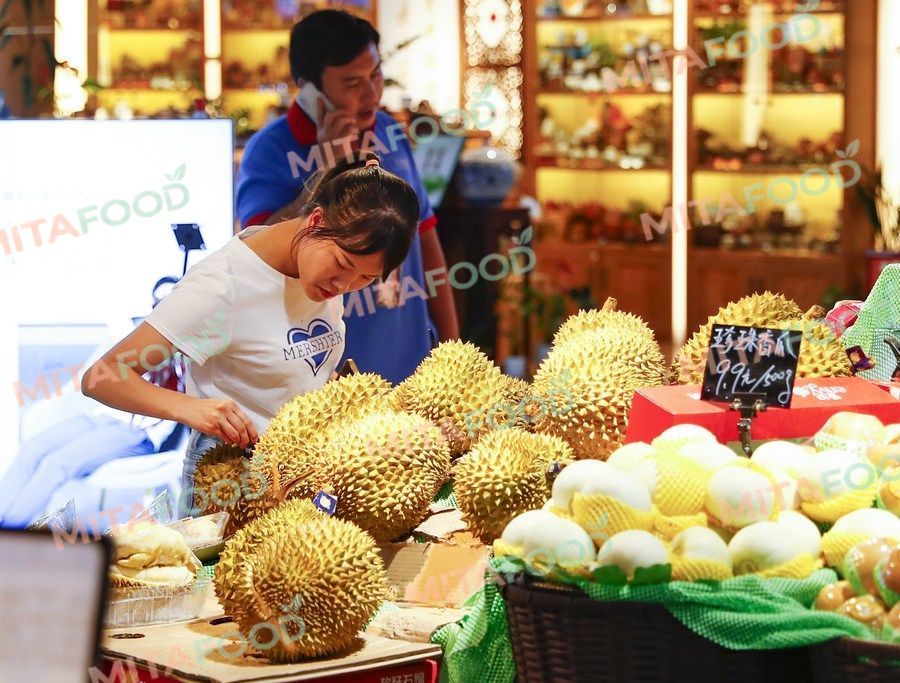
Food safety indicators, such as heavy metal levels (cadmium) and pesticide residues, are subject to increasingly frequent inspections by importing authorities.
Even a single test sample exceeding the permitted limit can disrupt the company’s entire export supply chain. This requires processing and packing facilities to invest in independent testing and inspection systems before shipments are exported.
Food safety standards and limits on prohibited residues
Risk of agricultural product deterioration during cold chain transportation
Fresh durians are highly susceptible to skin cracking, discoloration, or premature ripening if the storage temperature inside refrigerated containers is not properly maintained.
Insufficient specialized logistics infrastructure increases the rate of agricultural product losses during long-distance transportation. This is one of the key factors driving businesses to gradually shift toward modern IQF deep-freezing technology.
Mita Food – Comprehensive solutions for businesses entering the durian export market
To support international B2B partners in optimizing import procedures and accessing export-standard durian supplies, Mita Food provides an integrated production ecosystem. We are committed to addressing quality and logistics requirements throughout the entire order process:
- Own Raw Material Areas and Fully Compliant Legal Documentation: We control the supply of high-quality Ri6 and Monthong durians, with valid Planting Area Codes (PUC) and officially licensed Packing Facility Codes (PHC).
- Internationally Certified Processing Facilities: Our facilities operate IQF rapid-freezing lines at temperatures ranging from -35°C to -40°C and comply with ISO 22000, HACCP, and Halal standards, helping preserve up to 95% of the original fresh flavor.
- Large-Scale and Stable Supply Capacity: With a cold storage capacity of 2,000 tons, our system is ready to fulfill large-volume export contracts using 20ft and 40ft containers year-round, minimizing the risk of supply disruptions.
- Flexible OEM/ODM and Private Label processing services: We support partners in customizing packaging specifications, tray and vacuum bag sizes, and Private Label packaging designs according to the technical requirements of each target market.
- Comprehensive customs procedures and export documentation support: We assist with the expedited preparation of export documents, including Certificates of Origin (C/O) and phytosanitary certificates, as well as customs clearance at border gates and seaports.
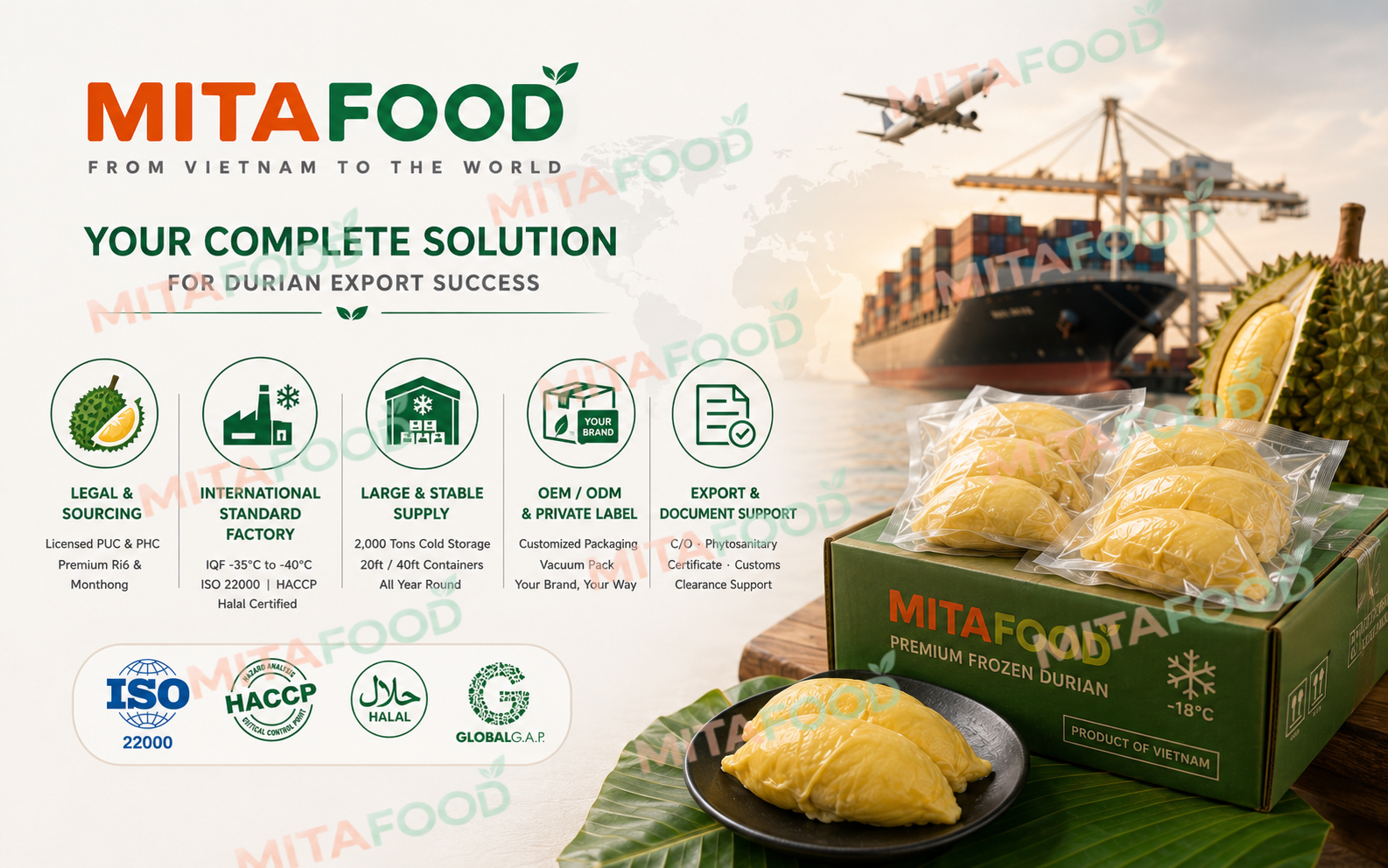
Mita Food – comprehensive solutions for businesses entering the durian export market
Frequently asked questions
To help B2B importers better understand trade regulations and requirements, Mita Food has compiled detailed answers to some of the most frequently asked questions below:
What legal procedures are required to export durian to China?
Businesses need to have Planting Area Codes (PUC) and Packing Facility Codes (PHC) approved by the General Administration of Customs of China (GACC), along with a compliant phytosanitary certificate.
What are the consumer trends for frozen durian in demanding markets?
Markets such as South Korea, the United States, and the EU show strong demand for IQF frozen durian due to its convenience, long shelf life, ease of storage, and ability to meet food safety requirements.
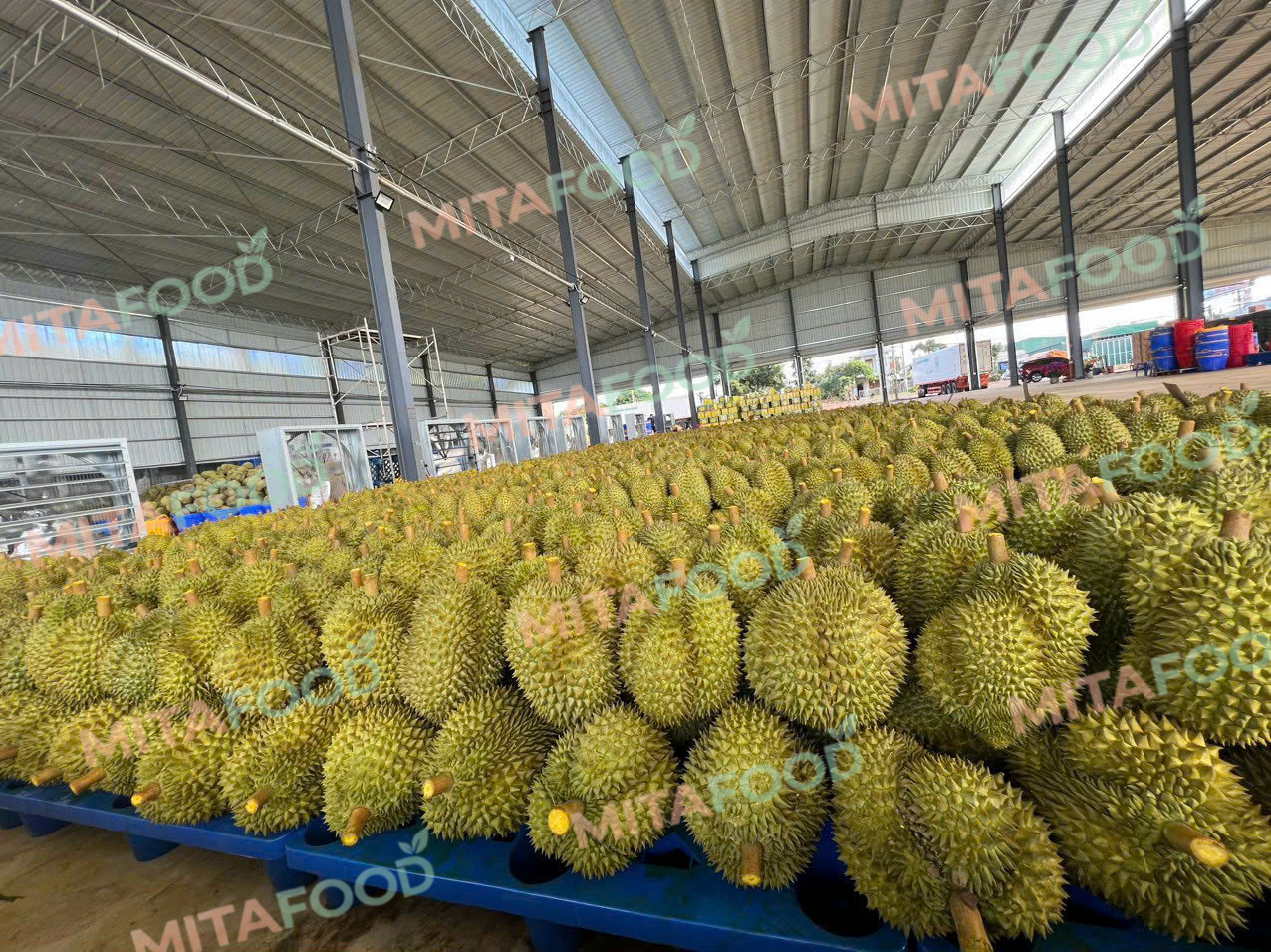
What are the consumer trends for frozen durian in demanding markets?
Does Mita Food provide comprehensive C/O and phytosanitary documentation support for export shipments?
Yes. We are responsible for preparing the complete set of export documents, including the Certificate of Origin (C/O), phytosanitary certificate, and Bill of Lading (B/L), helping our partners complete customs clearance smoothly in the importing country.
What opportunities does India’s market opening create for the durian export market?
This presents a significant opportunity to access a large and promising consumer market, helping diversify sales channels and reduce reliance on traditional markets.
What is the deposit requirement for B2B durian export orders at Mita Food?
Mita Food offers flexible payment options via T/T or at-sight L/C. The specific deposit requirement will be agreed upon based on the scale and terms of each contract.
Overall, the comprehensive analysis above provides a clearer perspective on the growth potential and challenges facing Vietnam’s durian export market today. For B2B businesses seeking high-quality fresh and frozen durian supplies, contact Mita Food to discuss suitable cooperation solutions.
We hope these insights have given you a deeper understanding of the durian export market and its potential trade opportunities. If you are a B2B partner looking for high-quality fresh and frozen durian supplies, contact Mita Food today for consultation and a competitive quotation.