
Understanding passion fruit export procedures is essential for businesses looking to optimize customs clearance times and minimize trade risks. From phytosanitary inspections and growing area codes to customs documentation, every stage requires accuracy and compliance. Let’s explore the legal requirements and export process with Mitafood!
Legal framework and export policies for passion fruit
Exported agricultural products are subject to strict controls to ensure food safety. Therefore, businesses need to understand the applicable legal requirements when exporting passion fruit to facilitate smooth customs clearance.
- Appendix I issued together with Decree No. 69/2018/ND-CP, dated May 15, 2018.
- Item 11 of Circular No. 15/2018/TT-BNNPTNT, dated October 29, 2018.
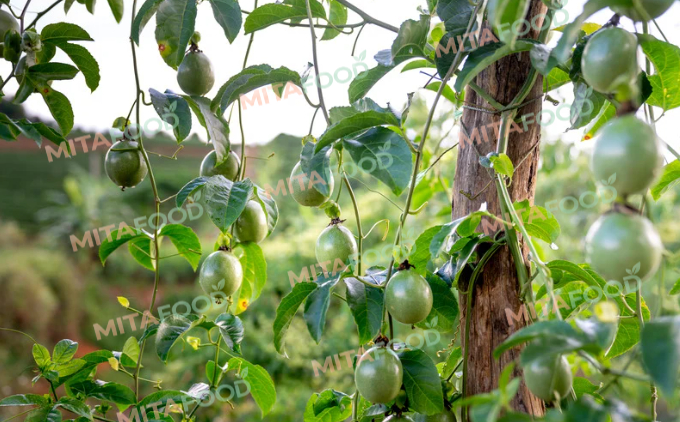
Passion fruit is permitted for export and is not included on the list of prohibited goods. However, businesses must register for a phytosanitary inspection before submitting their customs declaration. For passion fruit seeds intended for planting, an export permit for plant varieties is required in accordance with applicable regulations.
Legal framework and export policies for passion fruit
HS codes and export tax policies for passion fruit
According to the import and export tariff schedule, passion fruit falls under Chapter 08, Heading 10. The applicable HS codes and tax rates are outlined below:
| HS Code | Description | Preferential Export Tax Rate (%) | VAT Rate (%) |
| Chapter 08 | Edible fruit and nuts; peel of citrus fruit or melons | — | — |
| 0810 | Other fruit, fresh | — | — |
| 08109094 | Pomegranates, custard apples (sugar apples), wax apples, rose apples, passion fruit, red ambarella, jujubes, and Burmese grape | 0% | 0% |
Product labeling requirements
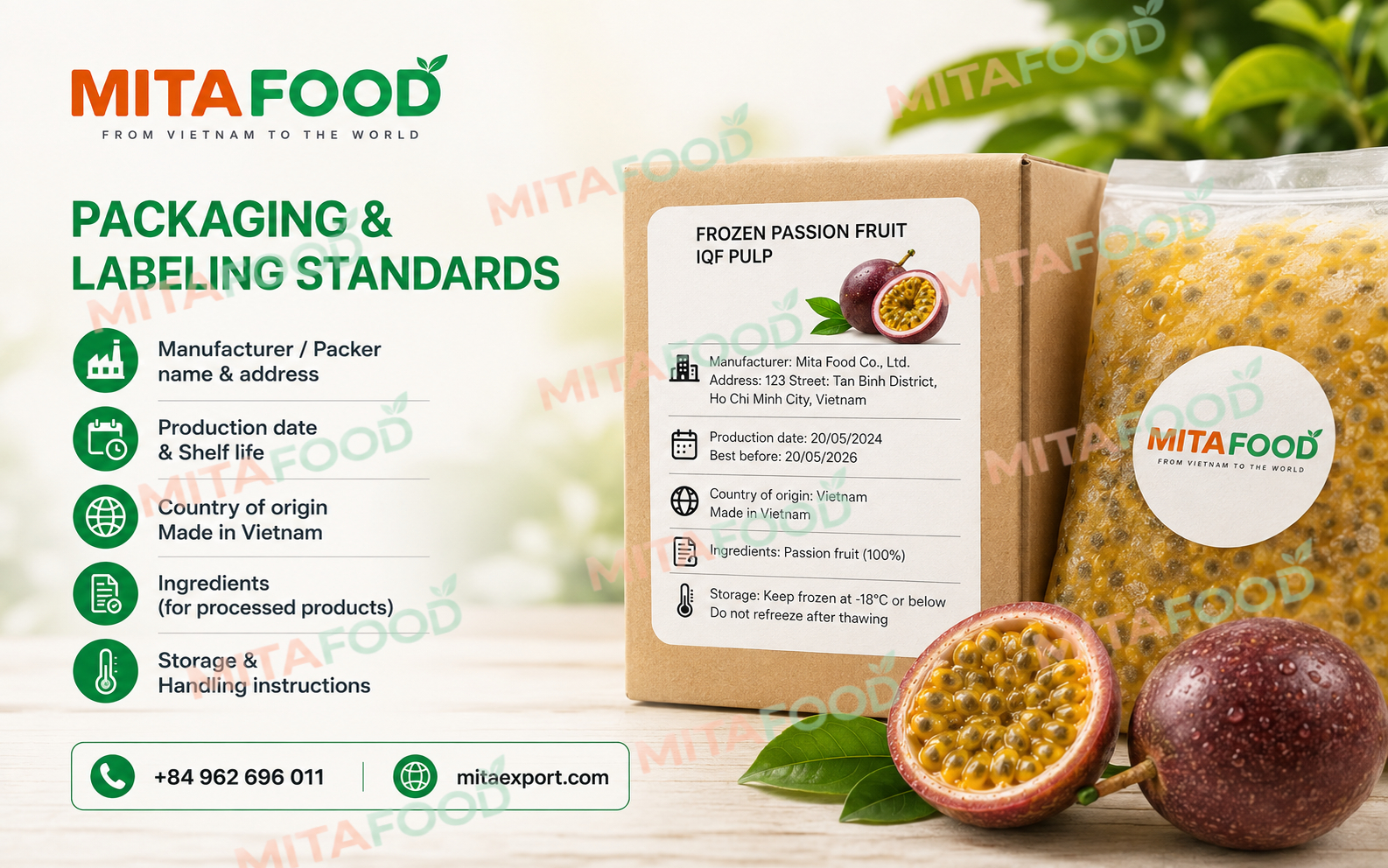
To ensure traceability and meet customs inspection requirements, passion fruit packaging must display all essential information in English and the language of the importing country, where required:
- Name and address of the manufacturer or packing facility.
- Production date and expiry date.
- Country of origin of the product (Made in Vietnam).
- Ingredients (for pre-processed or processed products).
- Relevant storage and preservation instructions.
Product labeling requirements
Customs documentation for passion fruit exports
As passion fruit is an agricultural product of plant origin, businesses must comply with applicable food safety standards, register for phytosanitary inspections, and carry out fumigation or other pest-control treatments when required by the importing country before loading the goods for transportation.
The export customs documentation must comply with Clause 5, Article 1 of Circular No. 39/2018/TT-BTC, which amends and supplements Article 16 of Circular No. 38/2015/TT-BTC. The documentation includes:
- Commercial Invoice.
- Sales Contract.
- Export Customs Declaration.
- Bill of Lading (B/L) or Air Waybill (AWB).
- Detailed Packing List.
- Other supplementary documents required under relevant specialized regulations.
Additional documents required for passion fruit export procedures
In addition to the basic customs documentation, traders should proactively prepare supplementary documents as required by applicable regulations. This helps optimize tariff benefits and meet the importing country’s specific requirements.
Health Certificate (HC)
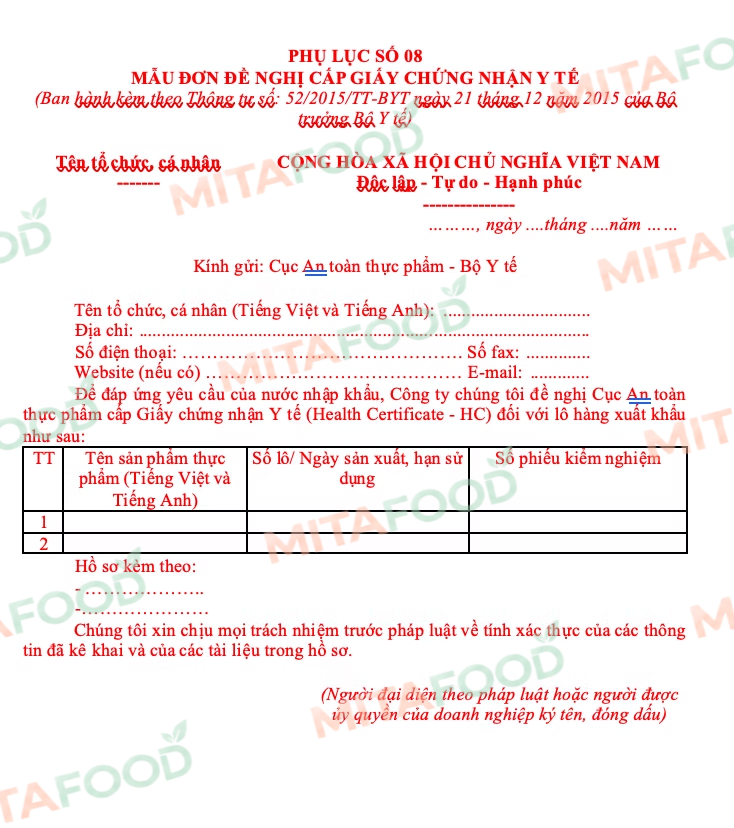
A Health Certificate (HC) is a document issued for a food shipment when requested by the business partner or the competent authority in the importing country. The application process is governed by Circular No. 52/2015/TT-BYT, under the authority of Vietnam’s Ministry of Health.
The application dossier for a Health Certificate includes:
- An application for a Health Certificate using the form in Appendix 08 issued together with Circular No. 52/2015/TT-BYT.
- Test results for the export shipment showing relevant food safety parameters, product name, batch number, production date, and expiry date, issued by a designated testing laboratory.
- A sample of the product label certified by the company.
- Copies of the Business Registration Certificate, the Certificate of Eligibility for Food Safety, or the Product Self-Declaration, as applicable.
Health Certificate (HC)
A Certificate of Origin is not mandatory for customs clearance in every case. However, it is an important document that helps buyers benefit from preferential import tariffs under the Free Trade Agreements (FTAs) to which Vietnam is a signatory.
The application for a C/O includes:
- An application for a Certificate of Origin using the prescribed form.
- A fully completed C/O form, including one original and the required copies.
- Relevant export documents: Bill of Lading (B/L), Commercial Invoice, Packing List, and the cleared customs declaration.
Phytosanitary Certificate
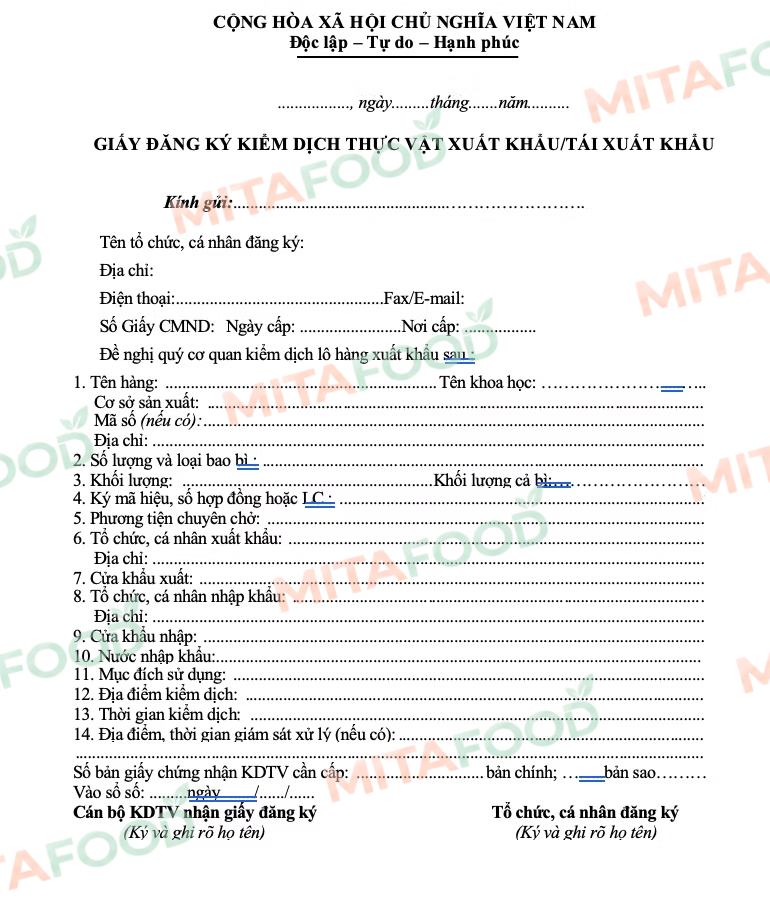
A Phytosanitary Certificate is a mandatory document confirming that the shipment does not carry pests, disease-causing microorganisms, or dangerous weeds into the importing country.
The phytosanitary inspection application includes:
- A phytosanitary inspection registration form using the prescribed template.
- The Commercial Contract, Invoice, Packing List, and Bill of Lading.
- A letter of authorization for the agent handling the procedures, if applicable.
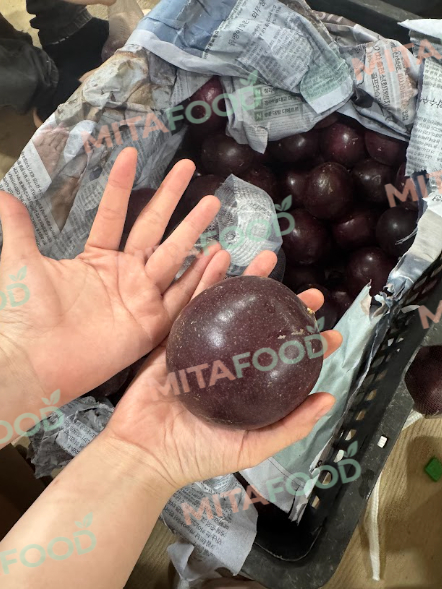
- A physical sample of the passion fruit shipment for inspection.
.
Phytosanitary Certificate
5-step process for passion fruit export procedures
The complete process for carrying out passion fruit export procedures can be summarized in five standard steps:
- Step 1: Gather and prepare documents: Collect and complete all required customs documentation and phytosanitary certificates in accordance with applicable requirements.
- Step 2: Submit the customs declaration: Register the customs declaration through the electronic customs system at the Customs Sub-Department responsible for the production facility or warehouse, or at the export border gate.
- Step 3: Document review: Customs authorities receive the declaration and verify the information against the accompanying documents.
- Step 4: Customs channel assignment: The system automatically assigns the declaration to one of three processing channels: Green Channel (direct clearance), Yellow Channel (document inspection), or Red Channel (physical cargo inspection).
- Step 5: Customs clearance and loading: Once customs procedures are completed, the shipment is cleared and eligible for loading onto a vessel or aircraft for international transportation.
5-step process for passion fruit export procedures
Mitafood – Comprehensive passion fruit supply and export support solutions
Handling passion fruit export procedures independently can be challenging for businesses unfamiliar with the phytosanitary regulations of different markets. With Mitafood, customers can rely on comprehensive agricultural supply and export solutions, including:
- Raw materials meeting VietGAP/GlobalGAP standards, with valid PUC and PHC codes for official export channels.
- Modern pre-processing facilities, ozone treatment, IQF freezing, and OEM packaging in accordance with international standards.
- Comprehensive support with legal documentation, Phytosanitary Certificates, Certificates of Origin (C/O), and efficient customs clearance procedures.
B2B partners and importers seeking fresh passion fruit, IQF passion fruit, or assistance with export procedures are welcome to contact Mitafood:
- Mobile / WhatsApp / WeChat / Zalo: +84 962 696 011
- Website: mitaexport.com
Mitafood – Comprehensive passion fruit supply and export support solutions
This article has provided an overview of the latest passion fruit export procedures and requirements. Thorough preparation of legal documentation helps businesses streamline customs clearance and save time. Contact Mitafood today for reliable sourcing solutions and comprehensive export consultation!